 ES
ES CL
CL BR
BR PT
PT IT
IT
BSF School, Growing tips
Cannabis Anatomy: The parts of the marijuana plant
Dec
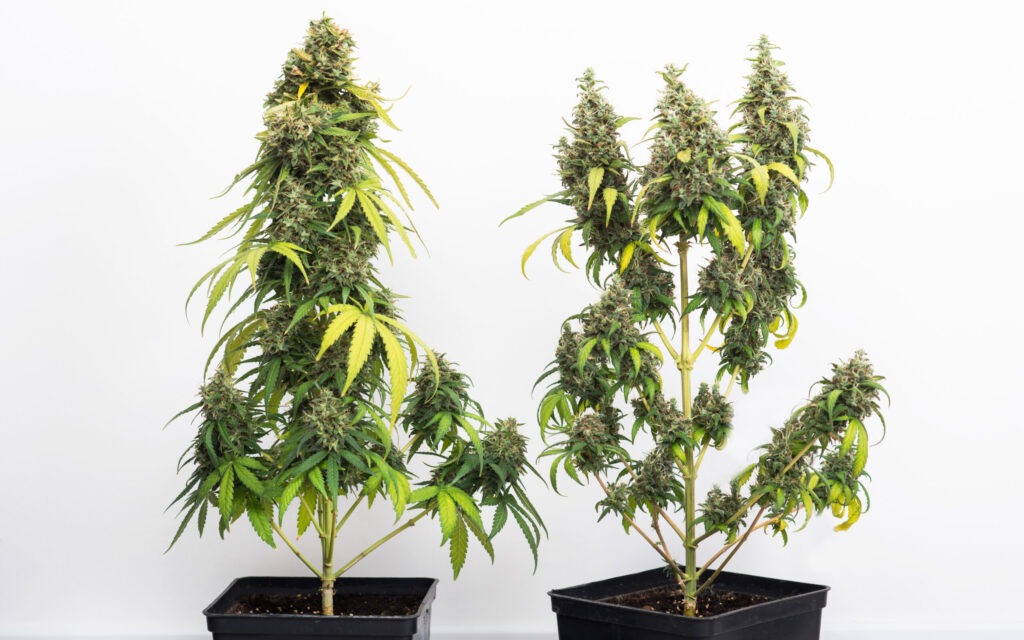
Like many other plants, cannabis is made up of several structures. This species grows from long slender stems and has its characteristic fan leaves that extend to the sides. When the plant blooms, buds start to show up.
Gorilla Glue Faster is, for example, a highly branched and strongly bush-shaped variety. It is a resistant plant and above all easy to prune, which will give us an abundant harvest and excellent quality.
Main parts of the marijuana plant

Stem
The stem is the backbone of the plant and supports it to grow vertically. From the stem, the branches grow laterally.
Leaves
Its characteristic fan leaves participate in the breathing process and help to produce energy.
Tail
In the upper part of the plant, we can see the apical sprout or main tail. A tail is where a group of shoots grow close together.
Stigma and pistil
Within the reproductive process of the plant, the pistils come into play. Within them, we can find the stigmas, which are vibrant filaments. The stigmas collect pollen from male plants. These hairs are first white and change their color as the flowering process progresses to tones such as orange, red, and brown. They are essential for the plant to reproduce but they do not contribute to its flavor and effects.
Bracts and calyx
A bract is what encapsulates the reproductive parts of the female. They appear as teardrop-shaped green “leaves” and are heavily covered with resin glands that produce the highest concentration of cannabinoids of all parts of the plant. The calyx is enclosed by these bracts and is imperceptible to the naked eye since it is a translucent layer over the ovule at the base of the flower.
Flowers
Buds or flowers are the long-awaited end product. They contain terpenes that give us incredible flavors and aromas, and cannabinoids that provide us with their effects.
The flowers can be smoked, in paper or vaporizer. They can also be used to create extracts, distillates, oils, and edibles
Trichomes
When we look at a bud with a magnifying glass, we can find transparent fungi that are trichomes. These are located in the beacons, leaves, and stems and are glands that secrete resin. They are originally formed to protect the plant from predators. Terpenes are found within trichomes, also their cannabinoids.
Cannabinoids
The two best-known cannabinoids are THC and CBD. Delta-9-tetrahydrocannabinol (THC) causes psychoactive effects or the “hit” of cannabis. It has therapeutic properties such as pain relief, anti-nausea, helps fight insomnia, increases appetite, and stimulates mood.
Cannabidiol (CBD) lacks almost any psychoactive effect, which is why it is preferred as a medicine. It helps relieve pain, is anti-nausea, anti-inflammatory, anti-anxiety, and helps in reducing epileptic seizures.
Cannabis plants can be indica, sativas, and hybrids. This will modify the structure of the plant, its size, its values regarding cannabinoids, its flavors, its aromas, and its final production.
